Tumor Mutational Burden, TP53 Pathway, and Immunotherapy
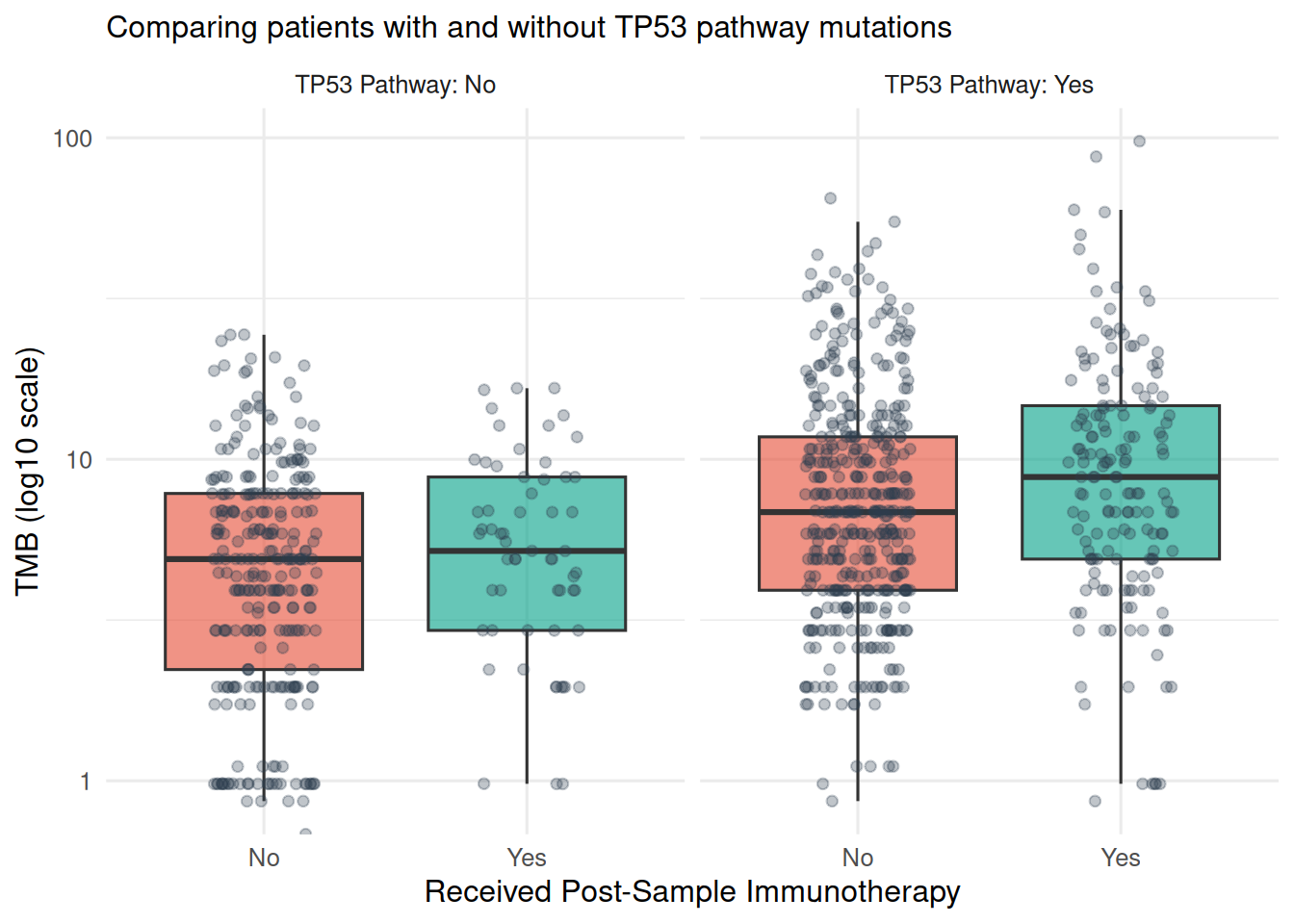
According to the data, we can see that of you have a higher TMB score, you are more likely to need immunotherapy. This makes sense because since TMB meausres the changes of DNA on a tumor, it should be more likely to for a patient to need a form f immunotherapy if the DNA on their tumor is very different from the DNA in their cells. From this data, we can also see that if you have a higher TMB score, you are more likely to have a TP53 pathway, meaning your body naturally fights against a tumor. This also makes sense because the more variation in the DNA of a tumor, the more likely it should be for your body to recognize that that tumor is bad and try to fight it.
Race, Sex, and Immunotherapy
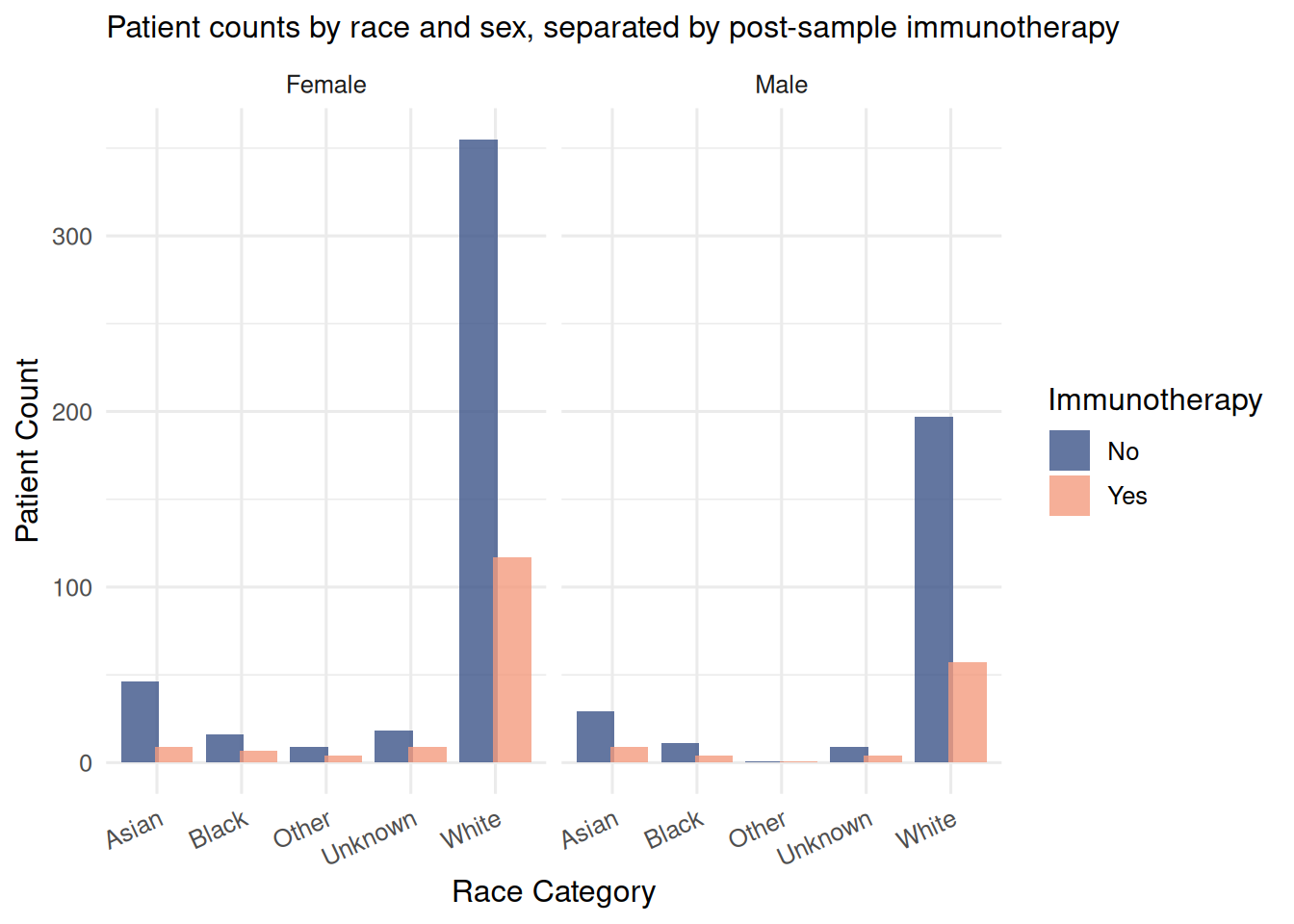
This plot suggests that white females are significantly more likely to not recieve immunotherapy after surgery/biopsy than white males. We can see this through the large difference between the two bars for white females compared to white males.
Age and Immunotherapy
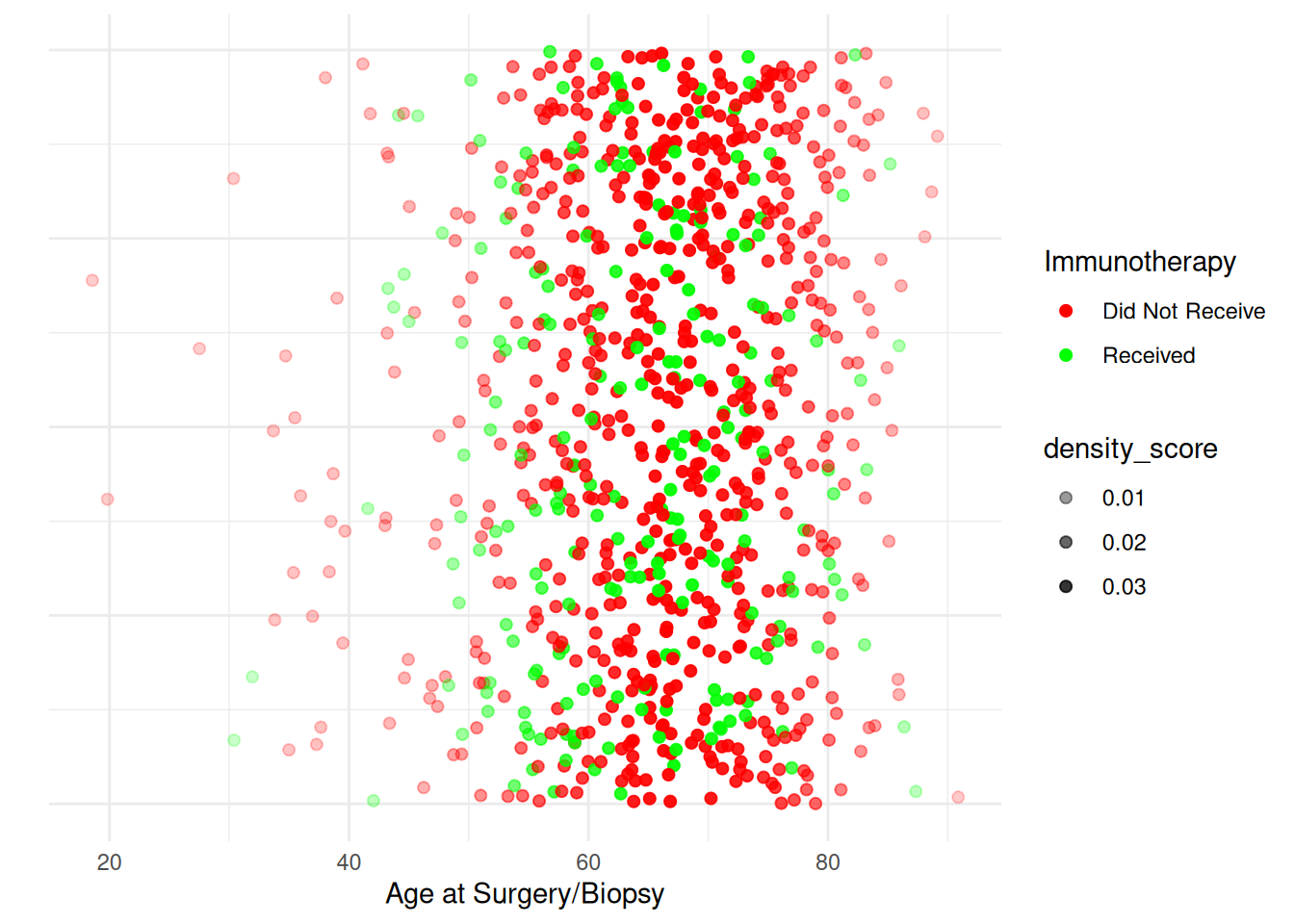
We can see from the graph, that there isn’t a clear correlation between age and immunotherapy after surgery/biopsy. However, we can note that most people that did not recieve immunotherapy after surgery/biopsy were between ages 60 and 80. However, the data for people who did recieve immunotherapy after surgery/biopsy is more spread out and doesn’t have a clear age range.